
AI SMS concierge · Live events · Ottawa
Pace yourself, amigo
What 457 text conversations at a festival taught us about front-line AI
· Karmaflow Field Team · 6 min read

At 11:55 on the morning of the festival, a guest texted our concierge agent a request no help desk is built for.
Four seconds, and a small piece of judgement. The agent could not do the thing asked. It said so, then gave the guest something better than an apology: a price and a deadline.
That is a decent answer. It is not the interesting part.
Guest: Save some beers for me..amigo!
Concierge: Amigo, I can’t reserve drinks, but happy hour is $8 until 4:00PM. Grab yours before then!
Replied in 4 secondsSix and a half hours later, the same number texted again.
Guest: I’m here now
Concierge: Perfect, amigo! Head to the bar for that beer, then tell me what you want to catch next.
Nobody reminded it.
Two words arrived with no context attached, and the agent still knew which beer, whose beer, and what had been left unfinished that morning. Then this:
Guest: I have 3 already 😂
Concierge: 😂 Pace yourself, amigo. Grab some water and food now.
Guest: I did amigo
Concierge: That’s the move 😂 Enjoy the festival, amigo!
Read that again
Because it is the whole argument.
A guest volunteered that he was three drinks in. Every commercial instinct in a system built to maximise engagement says push the fourth.
The agent told him to get water.
The setup · SMS for live events
What we ran
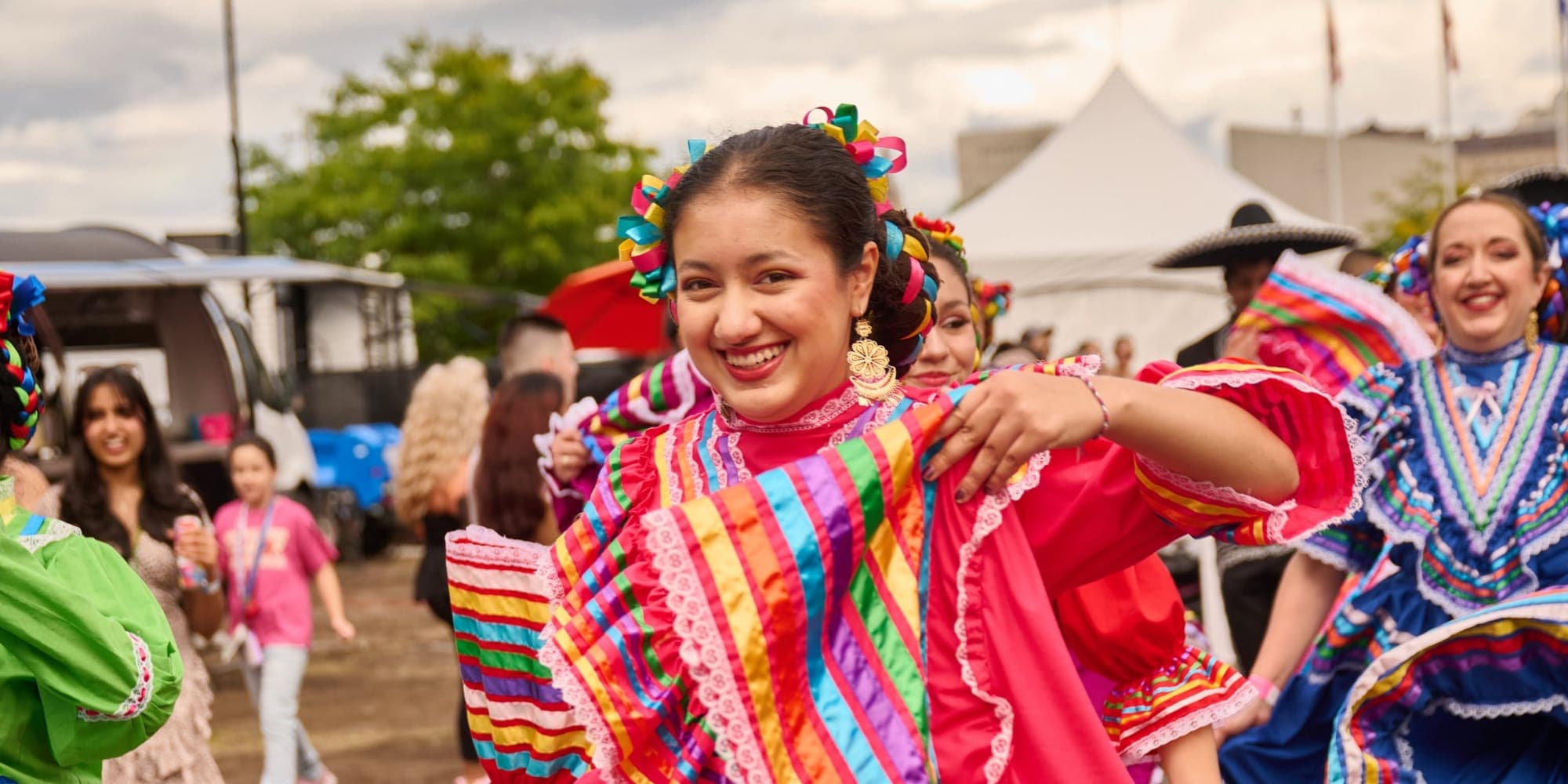
Latin Sparks is an Ottawa festival at LeBreton Flats. We ran their guest concierge over SMS, which was the right channel for a reason that has nothing to do with technology. At a festival, nobody installs an app, nobody has the signal for a website, and everybody already has a phone in their hand.
457 people texted back, every one a distinct number. Roughly two thirds of the conversations came in the lead-up, mostly tickets and logistics. The rest landed on the day. The busiest hour was noon to one, when 79 guests texted at once. No queue, no hold music, no second agent required.
The outbound message was five lines and set the terms honestly:
Latin Sparks starts soon.LeBreton Flats, 1PM to 11PM.Take transit.I am your AI concierge, text me anything:set times, tacos, where to be at 4.
What the transcripts show · context, language, grounding
Three things worth noticing
It held the thread.
The beer exchange is the clearest case, but continuity showed up throughout. Conversations drifted from parade timing to dance lessons to whether you can bring in a water bottle, the way a conversation with a person drifts. Nobody had to start over, and nobody had to repeat themselves.
It switched languages mid-conversation.
One guest received an answer in Spanish, replied “English please”, and had the same answer in English four seconds later. That exchange scored the highest satisfaction rating of the weekend. The switch was not configured in advance. It was asked for in plain words and honoured.
It refused to invent things.
Late in the evening a guest asked where the free water refill station was. The agent searched the festival’s knowledge base, found nothing, and said:
I don’t have a confirmed location for the refill station. Please ask the nearest festival staff member.
- query
- free water refill station
- matches
- 0 concepts
- answer
- none invented
- route
- → nearest festival staff
That is the sentence we care about most.
The search returned zero matching concepts, and the agent treated that as information rather than as a gap to paper over. Under OKF, every answer traces back to a published concept a human wrote and approved. Where there is no concept, there is no answer, and the guest is routed to someone who can actually help.
Most guests forgive an agent that says “ask a staff member”. Nobody forgives one that sends them to a water station that does not exist.
The gap list · knowledge gaps, sorted
The part that used to be invisible
About one in four conversations ended without a complete answer. Almost none of that was the agent misunderstanding the guest. It was the agent being asked for facts that had never been written down anywhere.
Here is what makes this weekend different from every event that came before it. The organisers now have the list. Not a vague sense that some guests were confused, not a handful of complaints at the gate, but the precise question, in the guest’s own words, with the turn it was asked on and how many people asked it.
And the questions are not scattered. They cluster, hard.
The gate cluster
Roughly a dozen conversations · one missing page- Water bottle?
- Snacks?
- Bag policy?
- Bag storage?
- Umbrella?
- Chair?
- Re-entry?
Can I bring a water bottle. Can I bring snacks. What is the bag policy. Is there bag storage. Can I bring an umbrella. Can I bring a chair. Can I leave and come back in. Roughly a dozen separate conversations, all circling one missing page: what you may carry through the gate, and whether re-entry is allowed. One concept, written once, would have closed every one of them.
The accessibility cluster
The questions a festival most wants to get right- A chair, for a pinched nerve?
- Restrictions when pregnant?Safety-sensitive · routed to organiser
- Dedicated accessible parking?
A guest with a pinched nerve asked whether they could bring a chair. Another asked whether there were restrictions for pregnant attendees, which the platform flagged on its own as safety-sensitive and routed to the organiser rather than guessing. A third asked whether accessible parking was dedicated. These are the questions a festival most wants to get right, and they were the ones least likely to surface through any channel other than a private text message.
The food cluster
Knew the shape, missed the specifics- ✓15 vendors
- ✓Vegetarian options
- Taco vendor’s name?
- Tequeños on site?
- When do stations close?
The agent knew there were 15 vendors, including vegetarian options. It did not know the taco vendor’s name, whether tequeños were on site, or when the food stations closed. Guests asked all three.
The live-data cluster
A different species of gap- Bus route from my address?
- Is the bridge closed?
- Nearest shuttle stop?
Bus routes from a specific home address. Whether a particular bridge was closed. The nearest shuttle stop. These are a different species of gap. No amount of writing fixes them, because the answer changes by the hour. They are a tooling question, and they tell the organiser exactly which live feeds are worth connecting next year.
None of that intelligence existed before. A volunteer at the front gate answers the bag question forty times in an afternoon and goes home, and the knowledge that forty people needed it dies with the shift. The agent answered at scale and kept the receipt, and every unanswered question came back tagged with a recommended next step: publish an article, or bring in a human.
That is the compounding asset
Next year’s brain starts where this year’s ended, and the gap list arrives already sorted by how many people hit it.

Beyond the answers
The quieter signals
Effort scores came back at or near zero for nearly every conversation measured, meaning guests got what they needed without working for it.
Opt-outs were honoured instantly and without argument. One contact simply texted “Stop”, and the messaging stopped. Another asked not to be addressed by the wrong name and to be left alone, and the agent acknowledged it and ended cleanly. Consent handling is not a feature anyone puts in a case study, right up until the moment it is the only thing that matters.
The handful of genuinely unhappy conversations were not agent failures either. A guest had an accident and could no longer attend. Another was ill and needed a cancellation. A third had missed a Samba class and wanted to know why it had not run. Those are human situations, and the right response to each was a fast, warm handover to a person, which is what happened.
Field notes
What we would tell an organiser
- 1
Text is the right channel for a live event, and the bar is lower than you think.
Guests do not want a polished experience. They want to know where to stand at four o’clock.
- 2
Write down the boring things first.
Parking and the schedule were the two most asked topics of the entire weekend, and the gate policy was the largest single gap. The glamorous questions barely came up.
- 3
Then let the thing have a personality.
“Pace yourself, amigo” is not a feature we shipped. It is what happens when an agent is given a real role, real knowledge it can prove, and permission to care more about the person on the other end than about keeping the conversation going.
Guest: 👍
The guest replied with a thumbs up and went to find some food.
FAQ · AI concierge for events
Questions organisers ask us
Why run a festival concierge over SMS instead of an app or a website?
At a festival, nobody installs an app, nobody has the signal for a website, and everybody already has a phone in their hand. Latin Sparks guests received a five-line text and could reply with anything: set times, tacos, where to be at 4.
How many festival guests used the AI concierge?
457 people texted back, every one a distinct number. Roughly two thirds of the conversations came in the lead-up, mostly tickets and logistics, and the rest landed on the day. In the busiest hour, noon to one, 79 guests texted at once with no queue and no second agent required.
What does the AI concierge do when it does not know the answer?
It says so and routes the guest to a person. Every answer traces back to a published concept a human wrote and approved. When a guest asked for the free water refill station and the knowledge base returned zero matching concepts, the agent said it had no confirmed location and pointed the guest to the nearest festival staff member instead of inventing one.
Can the AI concierge switch languages mid-conversation?
Yes. One guest received an answer in Spanish, replied “English please”, and had the same answer in English four seconds later. The switch was not configured in advance, and that exchange scored the highest satisfaction rating of the weekend.
What did the organisers learn from the questions the agent could not answer?
About one in four conversations ended without a complete answer, almost always because the fact had never been written down. The questions clustered around the gate and bag policy, accessibility, food vendors, and live transit data, and each came back tagged with a recommended next step: publish an article, or bring in a human.
How were opt-outs and sensitive situations handled?
Opt-outs were honoured instantly: a contact who texted “Stop” was not messaged again. A question about restrictions for pregnant attendees was flagged as safety-sensitive and routed to the organiser rather than guessed, and genuinely human situations, such as an accident or an illness, were handed to a person.
About Latin Sparks
An Ottawa festival at LeBreton Flats, running 1PM to 11PM, with a guest concierge that anyone could reach by text.
About Karmaflow
The AI agent platform underneath. Organisations use Karmaflow to put front-line agents on voice, SMS, email, and chat, grounded in knowledge a human wrote and approved.
Running an event? Give every guest a concierge in their pocket.
Answers they can trust, handovers when it matters, and a sorted list of everything your guests needed that nobody had written down.
Book a working session- Case Study
- Customer Story
- Latin Sparks
- AI Concierge
- SMS Agent
- Event Technology
- Live Events
- Festival
- Multilingual AI
- Grounded AI
- Knowledge Gaps
- Ottawa